Repair, Rewear
Product Design
Marketing
Illustration
Bookbinding
Screen Printing
Editorial
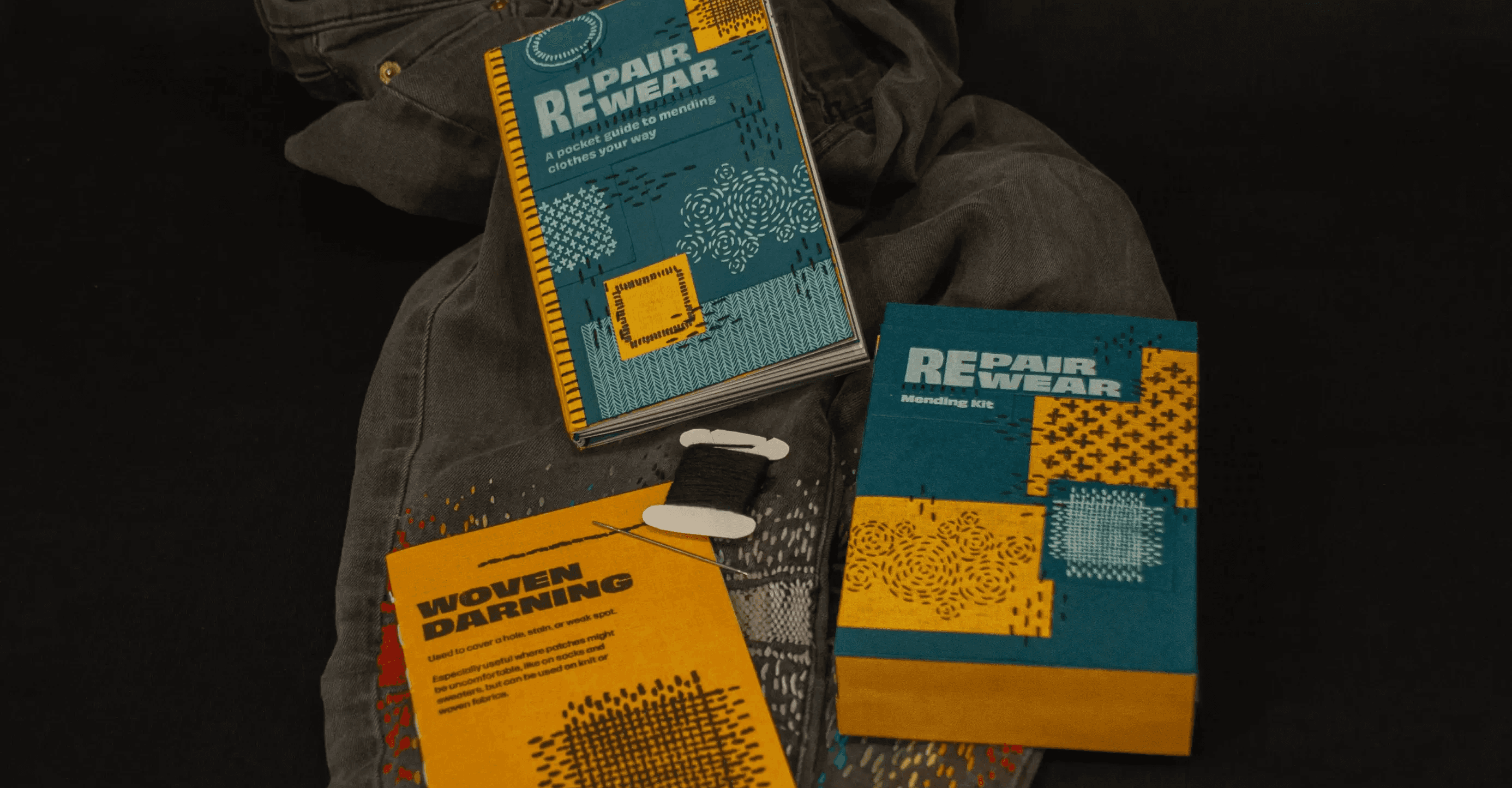
As my Final Major Project, I explored how to make mending clothes approachable and desirable for people aged 16–28, inspired by comments I got from peers on visible mending on my own clothes, stating that they "could never do that". I created a small, handy guide book and matching sewing kit, completed with a cohesive brand appearance and advertisements for social media.
Challenge
Gen Z is least likely to repair their clothes out of any age group. Without prior exposure, they lack experience and confidence in their repair skills, struggle accessing needed equipment, and associate mending with the past. Online tutorials exist, but many struggle transferring learned techniques to their own garments.
Insight
Instead of using sustainability concerns as a main motivator, we must highlight the creative potential of mending as a hobby. Interviewing Em Martin from overstorymending.co.uk also highlighted the importance of knowing different materials and tools to correctly apply learned mending skills.
Impact
Users gain knowledge on how and when to apply the most common mending methods, building confidence in their skills. They extend garment lifespans, turn them into unique and cherished pieces, and save money. This celebration of visible signs of repair increases social exposure and encourages others.

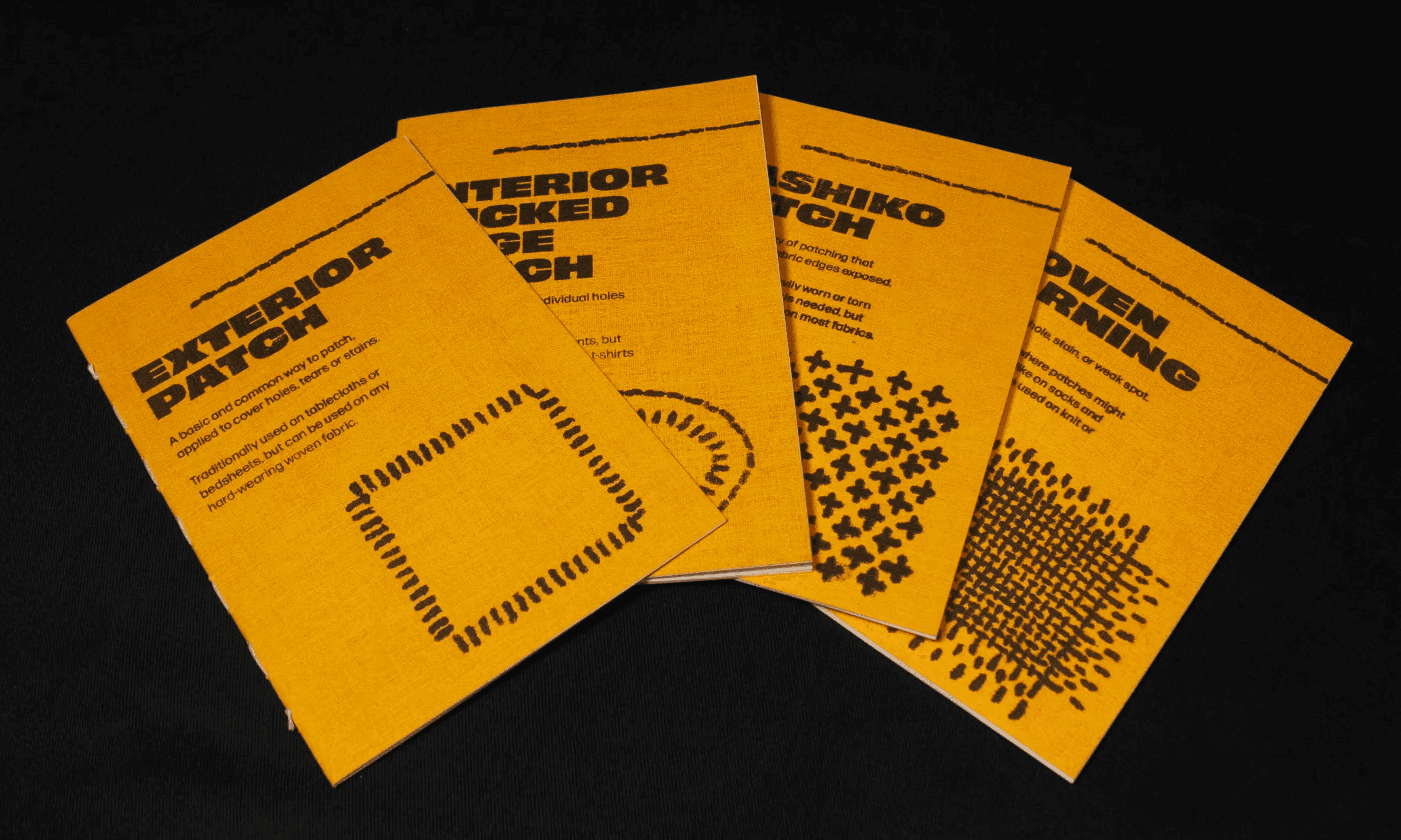
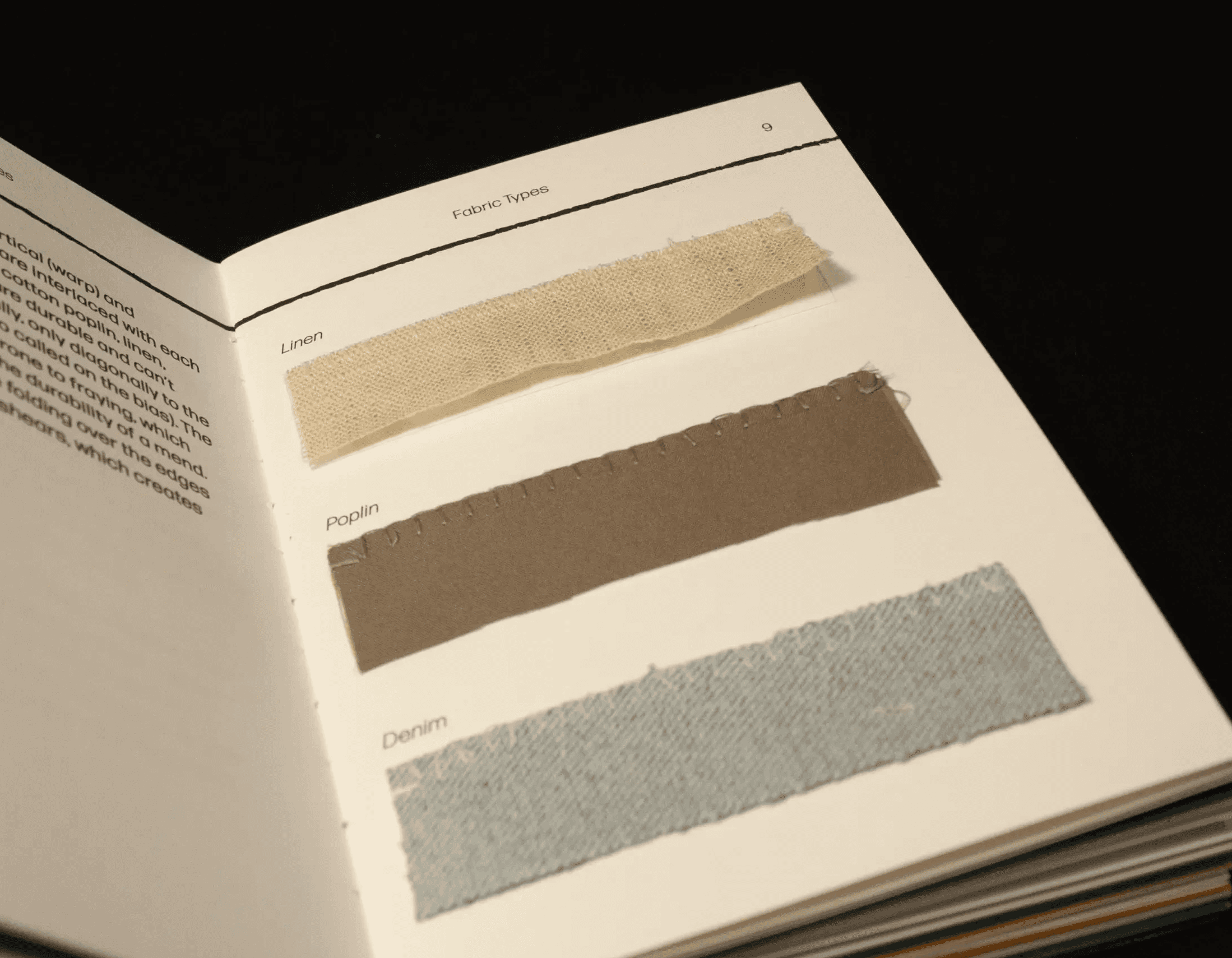
Tests showed that instructional books were often perceived as intimidating due to their size. To avoid this, the mending guide was restricted to an A6 format, making it approachable. Sections containing information on different mending methods were secured with elastic string, allowing them to be taken out as separate booklets for easier handling.

Mending Guide
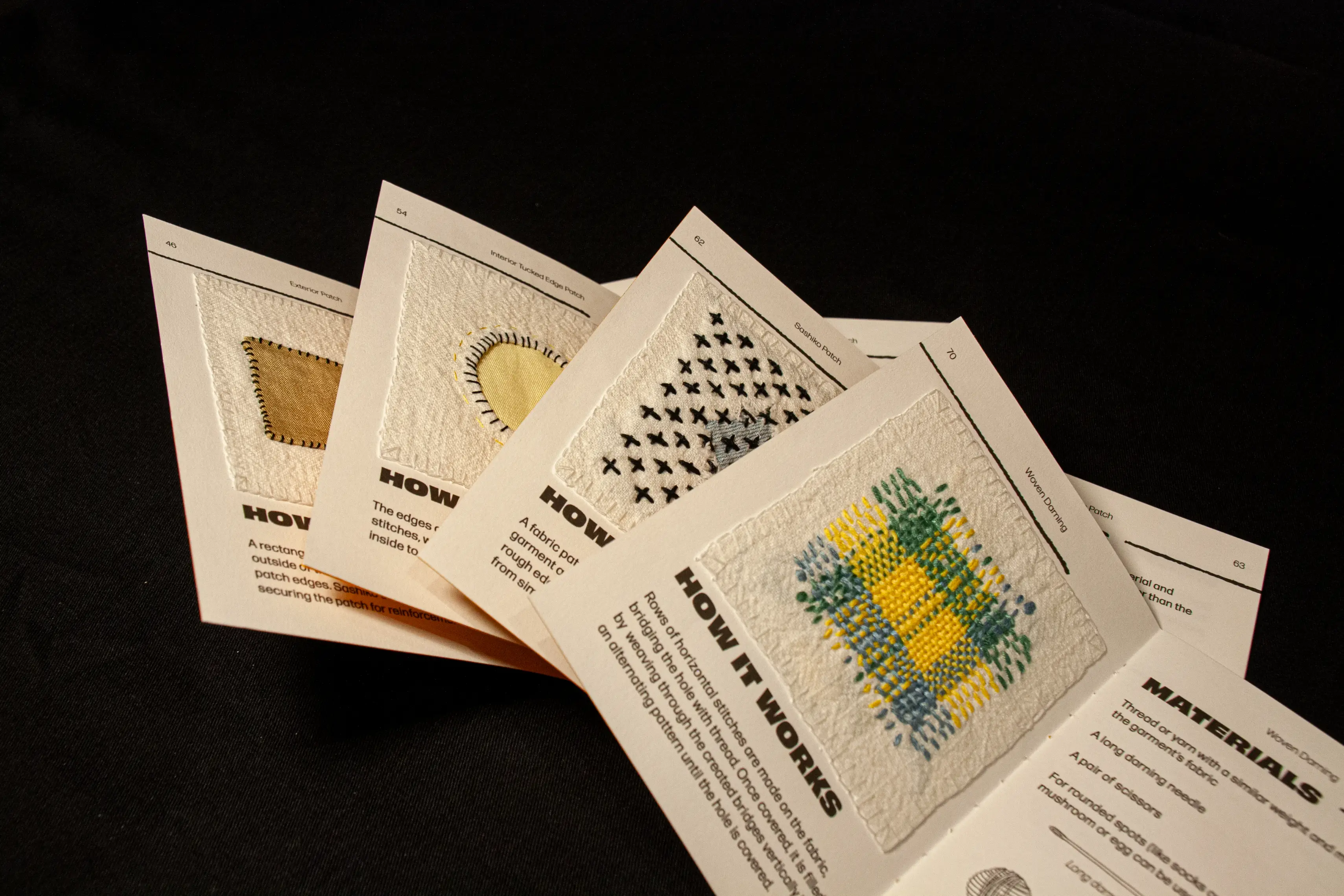
Stitched details on textured paper, fabric samples and handmade examples of each method invite tactile interaction while providing important material context.

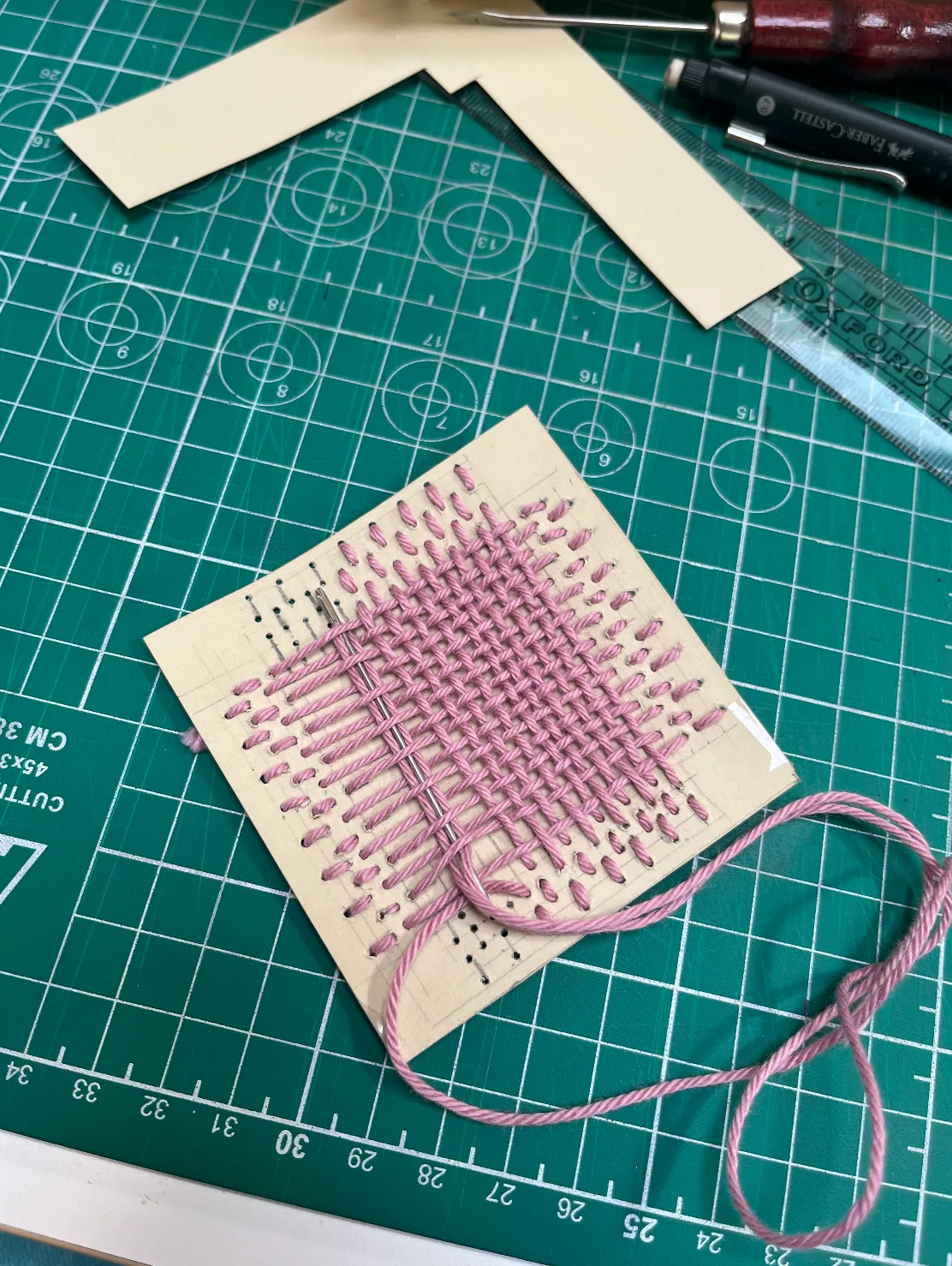
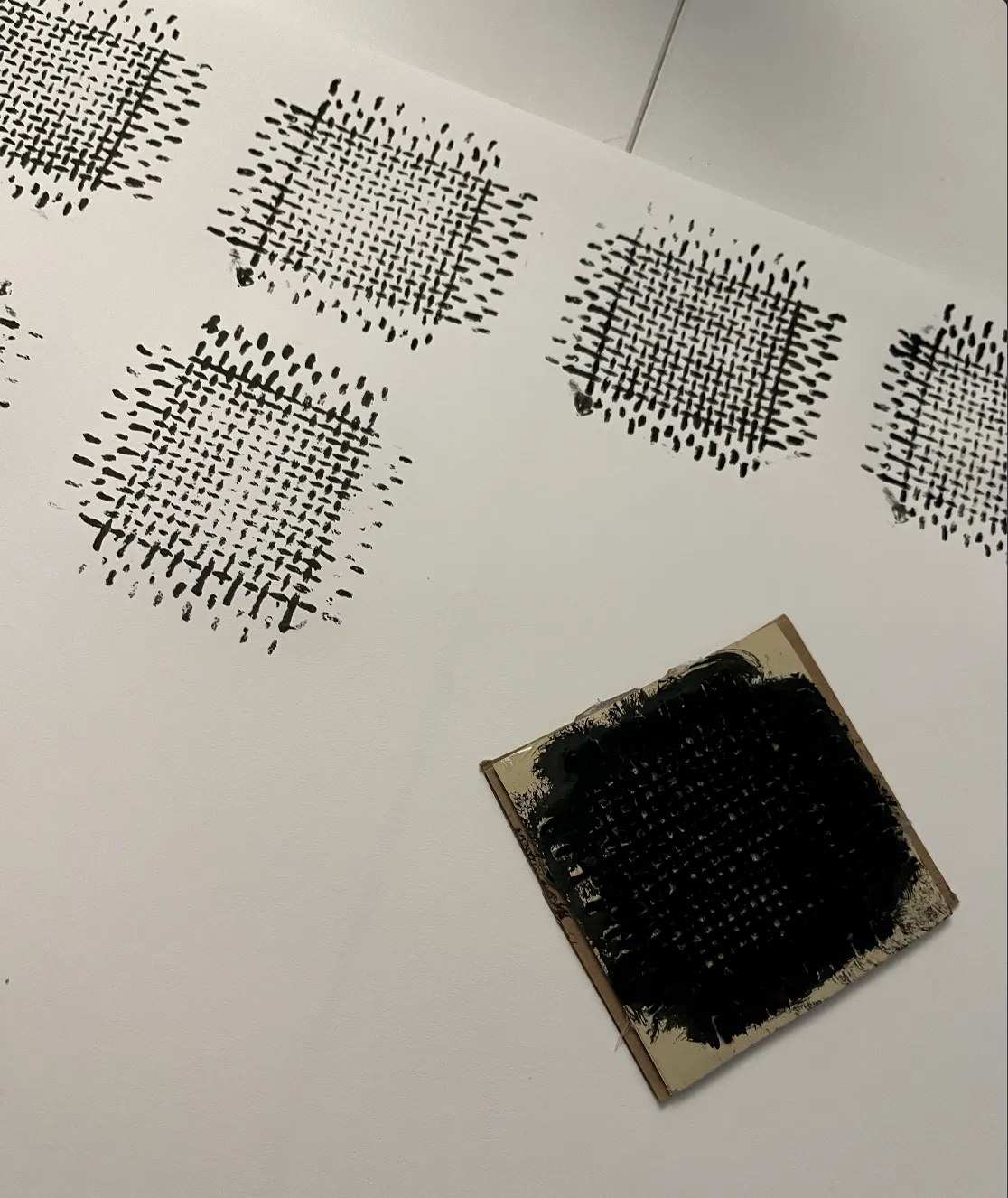
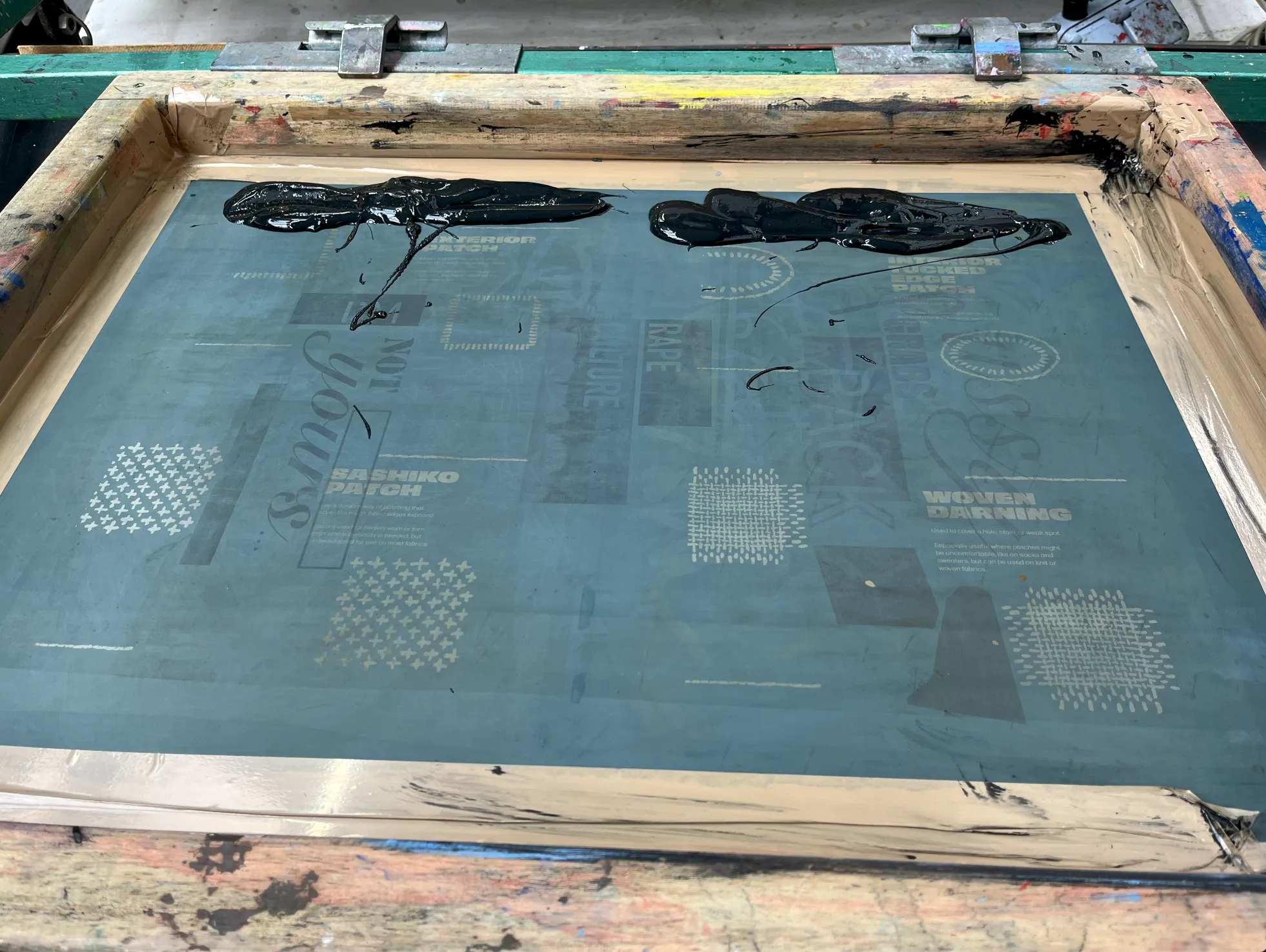
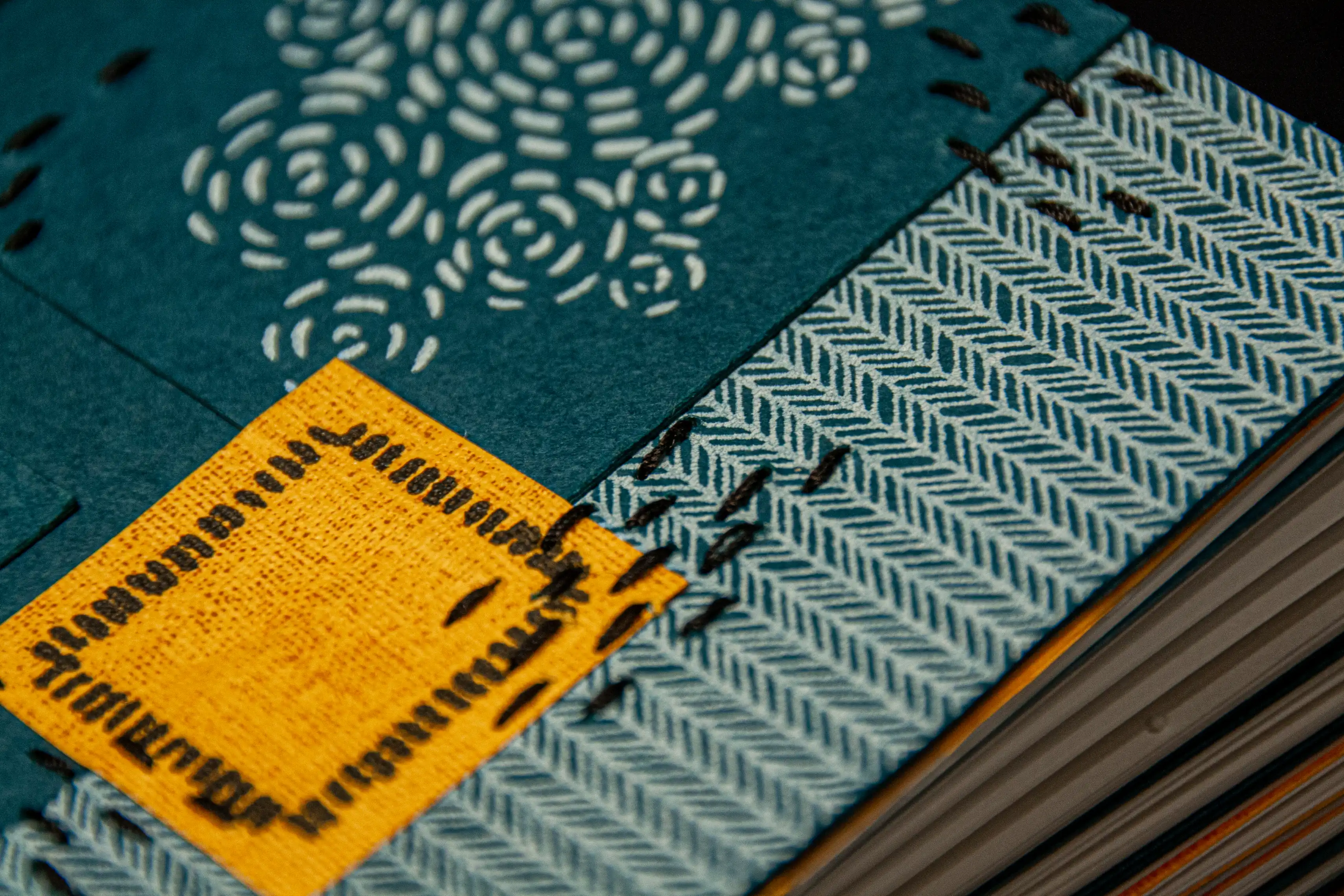
I created authentic textures for the covers by stamping stitch patterns onto paper. The resulting textures were combined in Adobe Photoshop and later screen printed. These details, combined with custom illustrations made in Procreate, emphasise embracing imperfections.
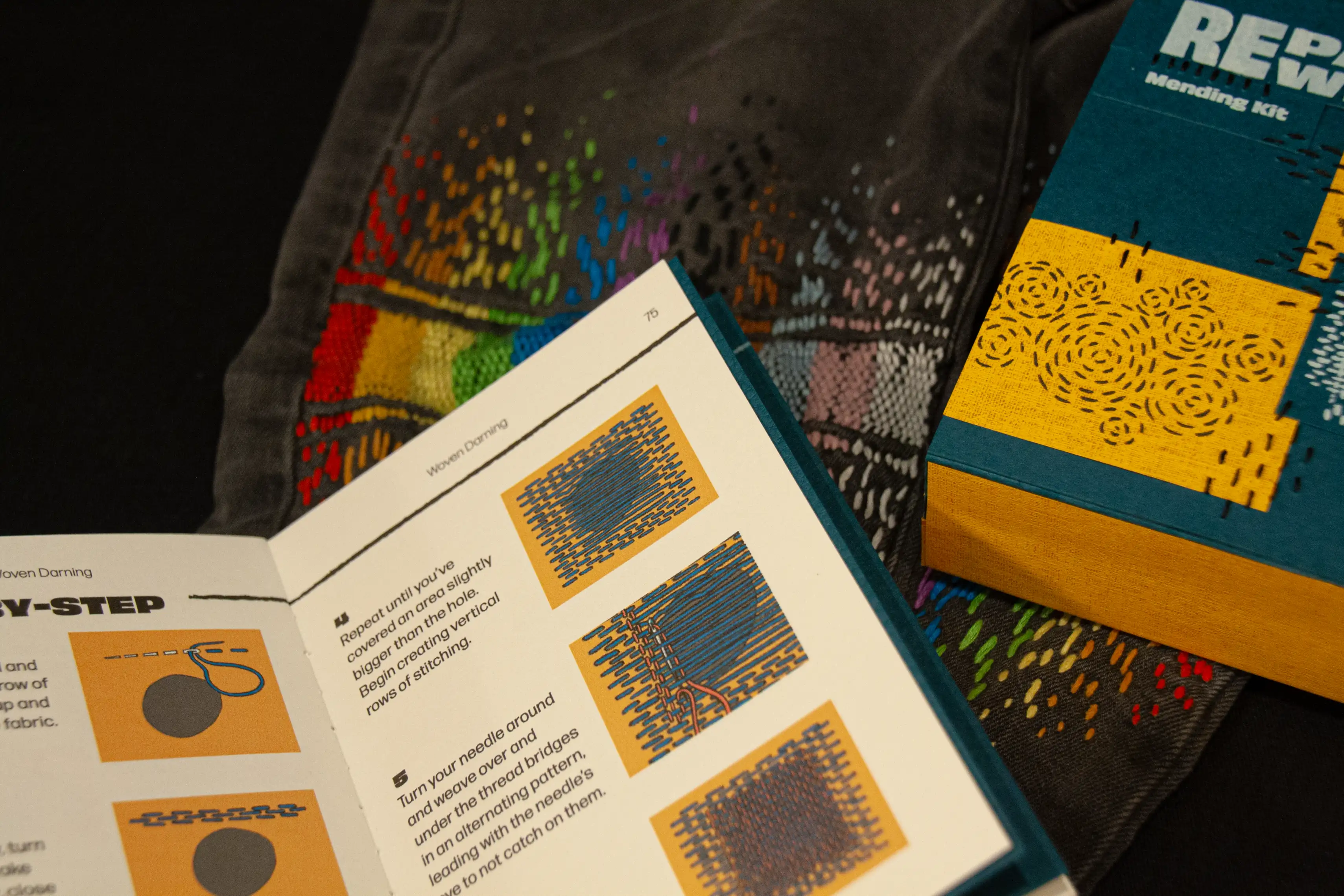

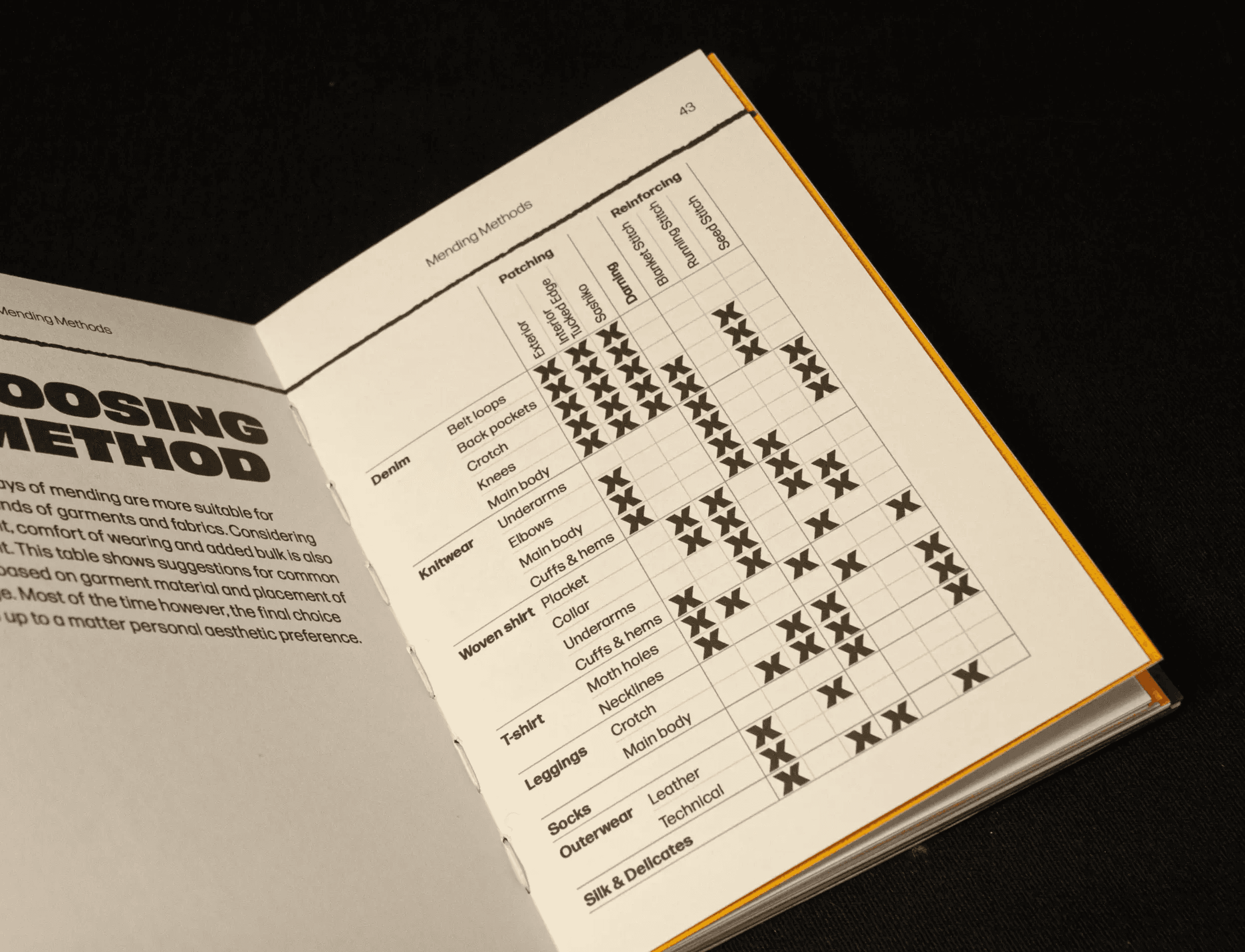
In addition to information on the correct materials, the guide includes tips on choosing methods for different applications and additional repair knowledge. This helps users build confidence in their ability to make decisions about mending.

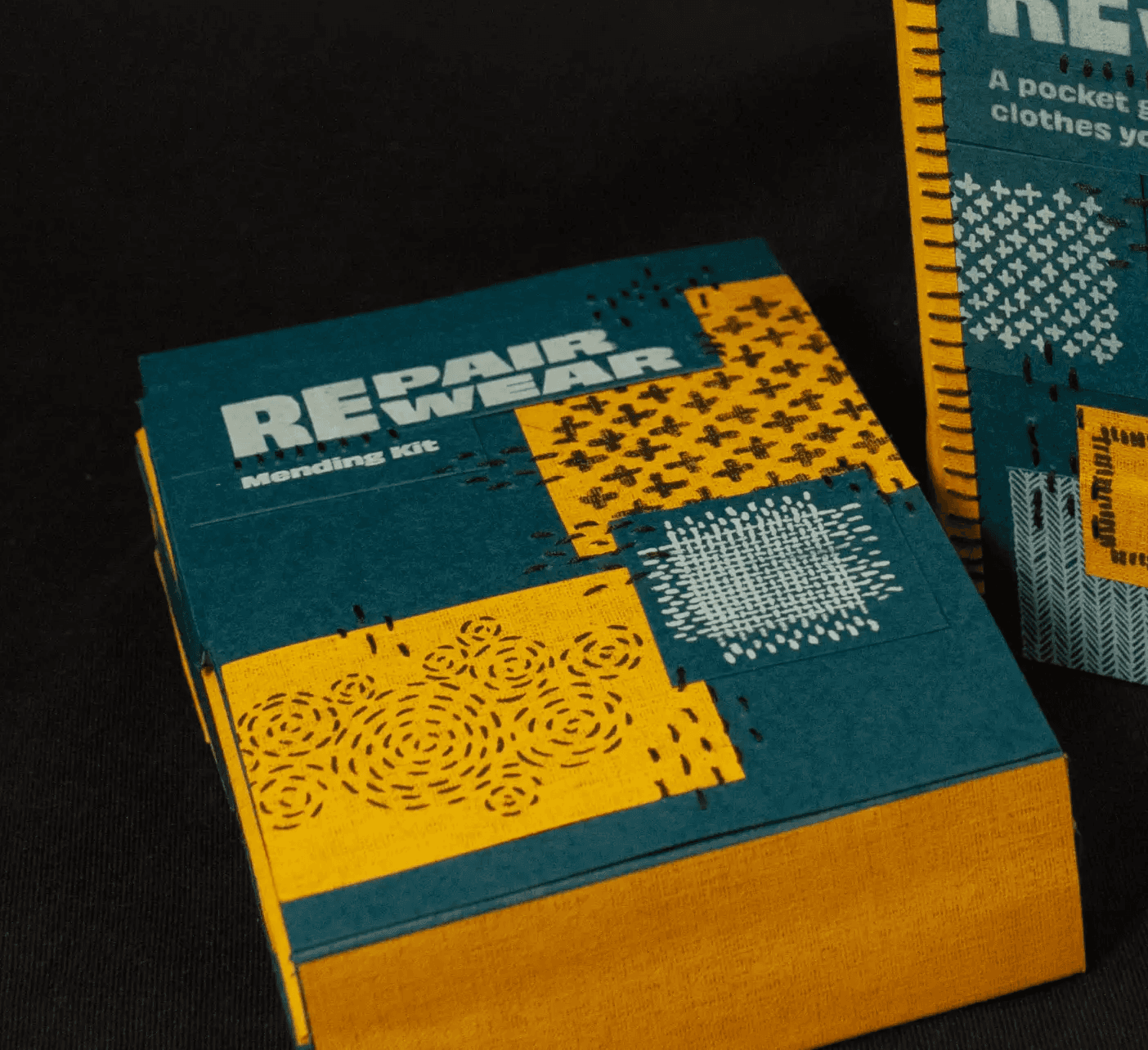
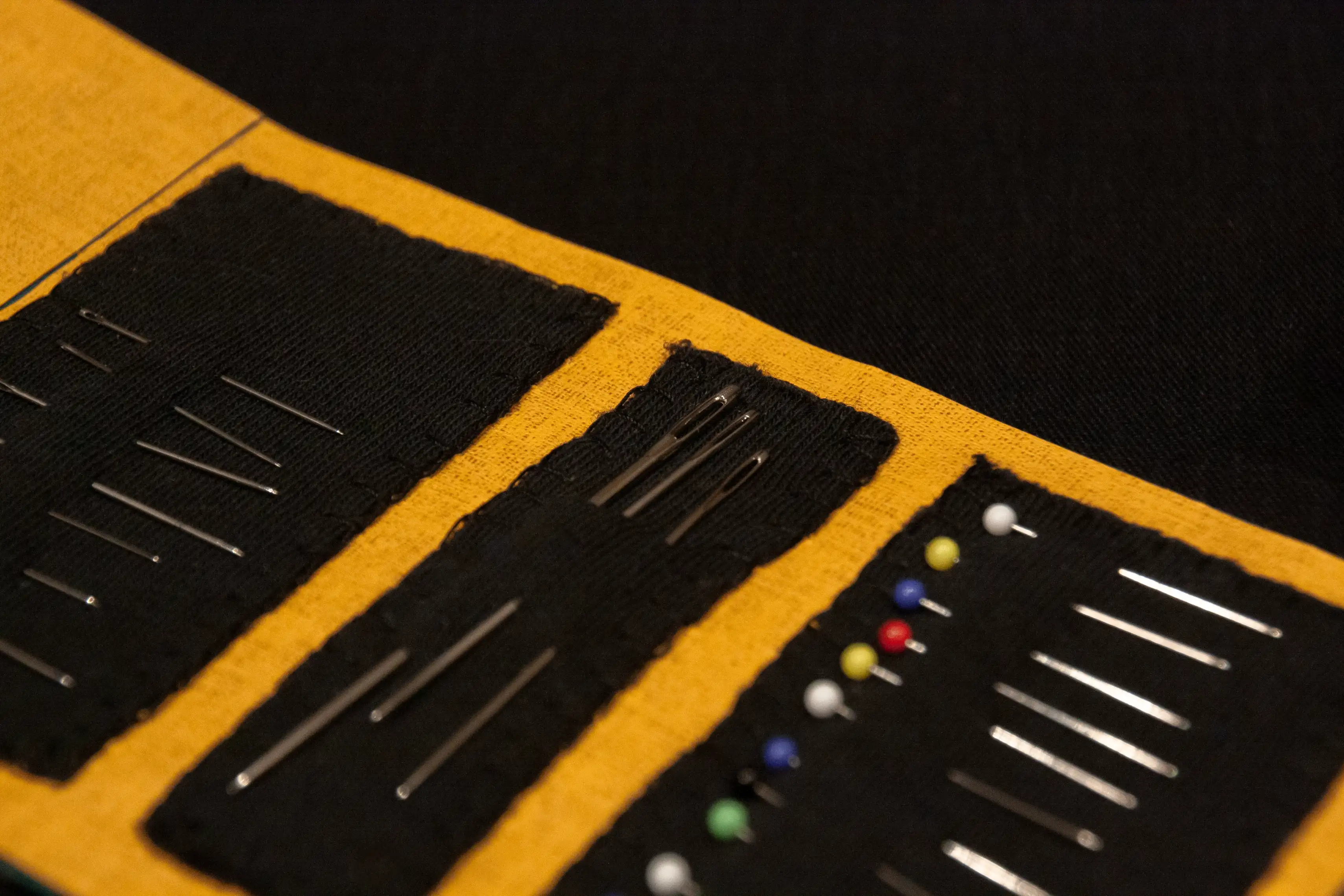
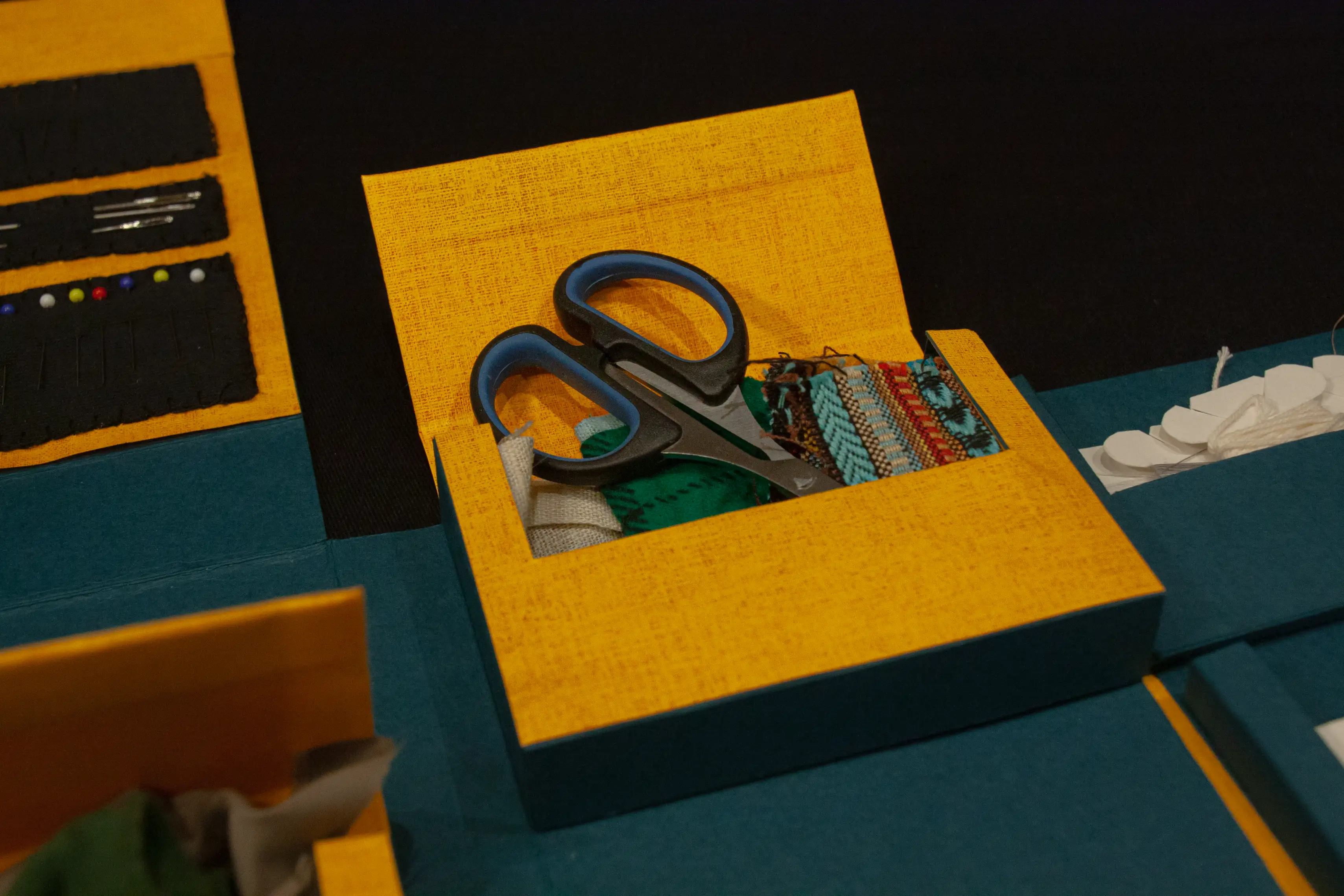
The mending kit folds out from an A6 size and includes needed tools and materials, as well as space to fit one of the smaller booklets, to further reduce the barrier to entry.
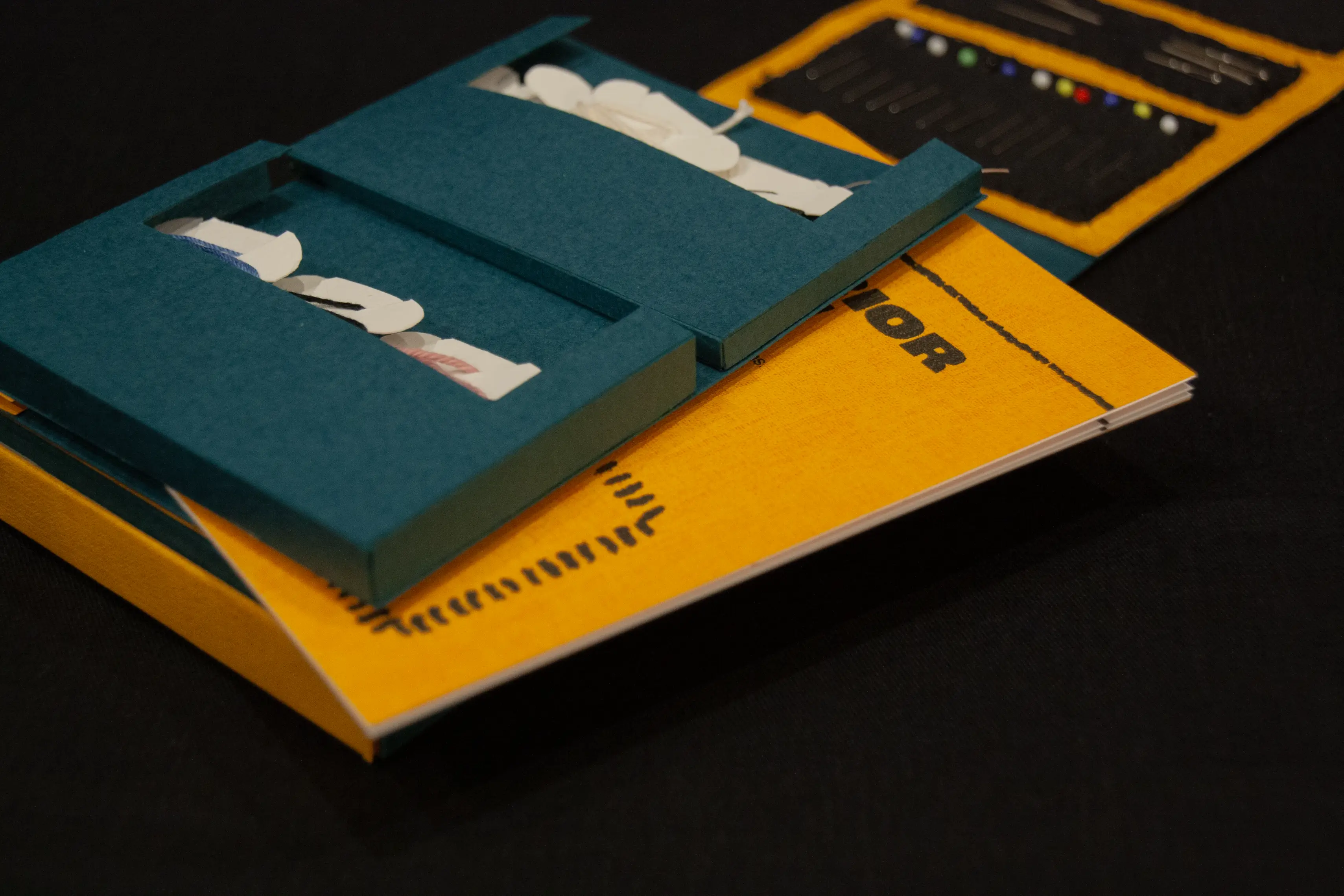

Mending Kit
Animated social media posts highlight the creative potential of visible mending by showcasing different options illustrated on top of real garment damage.